FlipScout
A local console that finds underpriced items in a marketplace and tracks resale flips.
Prototype: runs locally on demo data.
43 unit tests passing offline, with no API keys
- Where
- Personal project
- Role
- Product and build
- Built with
- Python, SQLite, Streamlit, httpx, unittest
What I made
FlipScout ranks used furniture and decor listings by distance, pickup effort, condition and likely margin, explains each score, drafts messages to the seller and tracks each flip.
The analysis step uses a language model when one is configured and rules when it isn't, so the demo runs with no keys and no network.
- Listingsdemo data, a pasted listing URL or an exported file
- Screendistance, pickup, condition words and freshness give a first score
- Researcha language-model analysis step with a rule-based fallback estimates resale and profit
- Plana target buy price and three seller messages, sent by hand
- Trackstatus, purchase, repair and sale for each flip
12test files covering scoring, screening, import, drafts and storage
3seller messages drafted per researched listing: opener, fallback and ceiling
5dashboard tabs: queue, battle center, flip pipeline, ops and settings
What came out of it
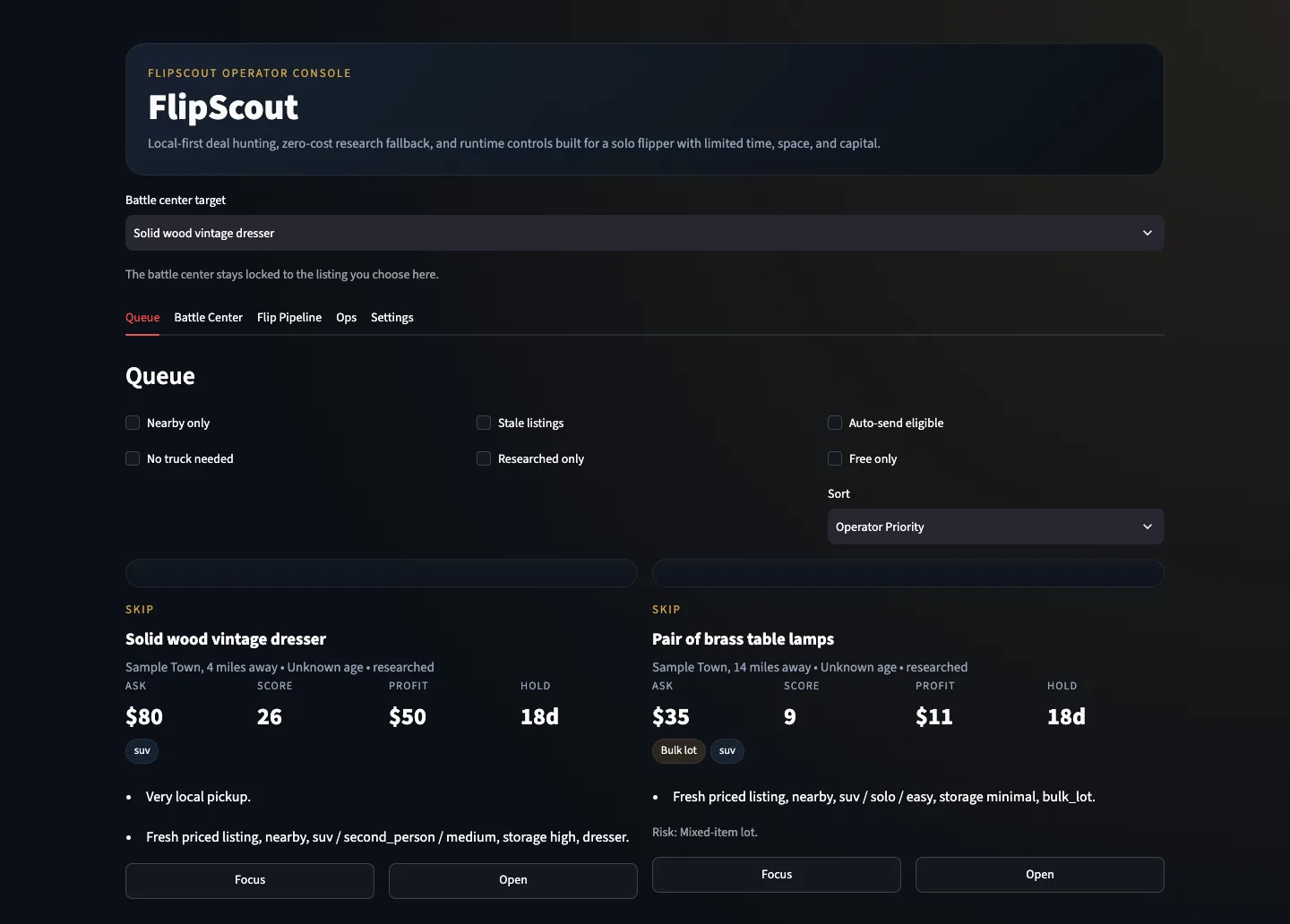
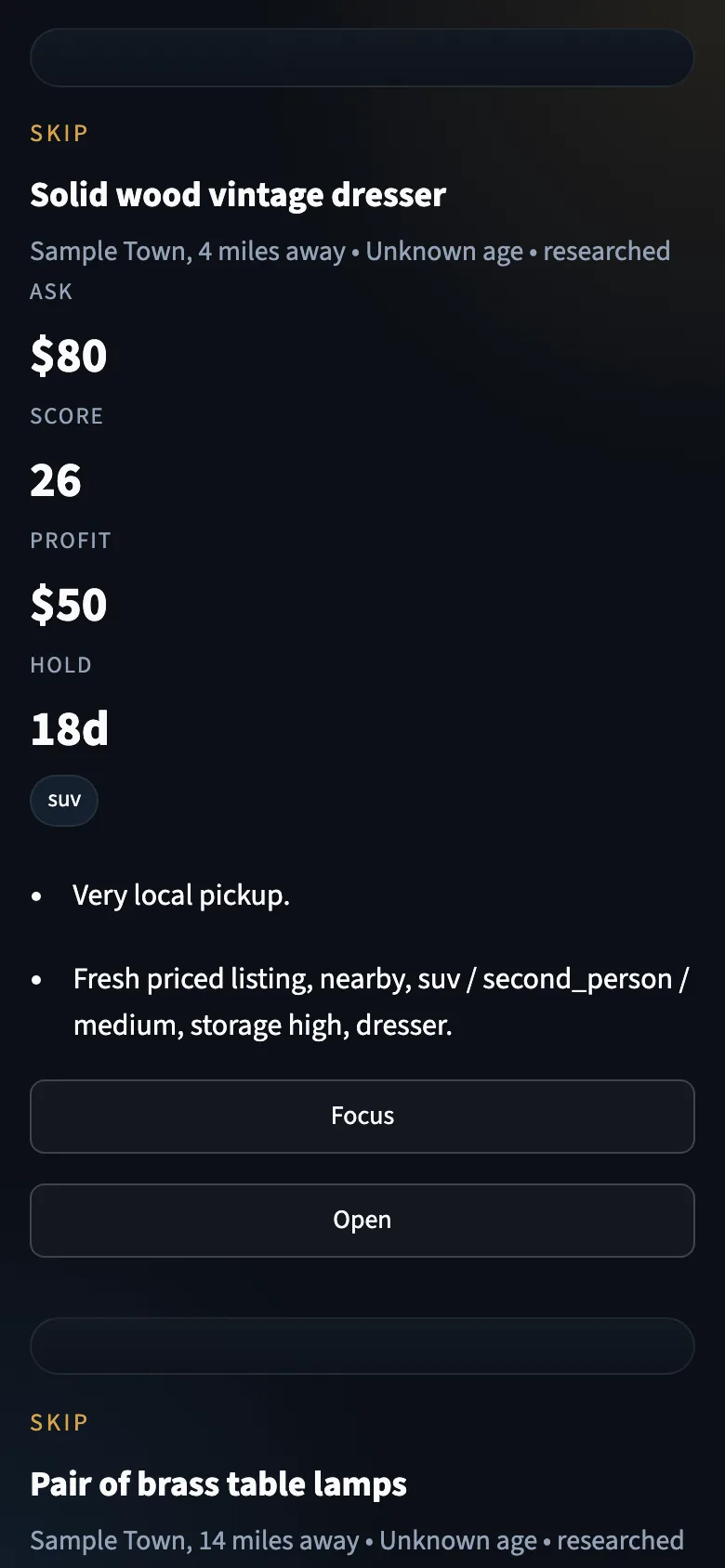
The deal queue
Two invented listings. The rules score the dresser 26 and the lamps 9, and mark both skip.
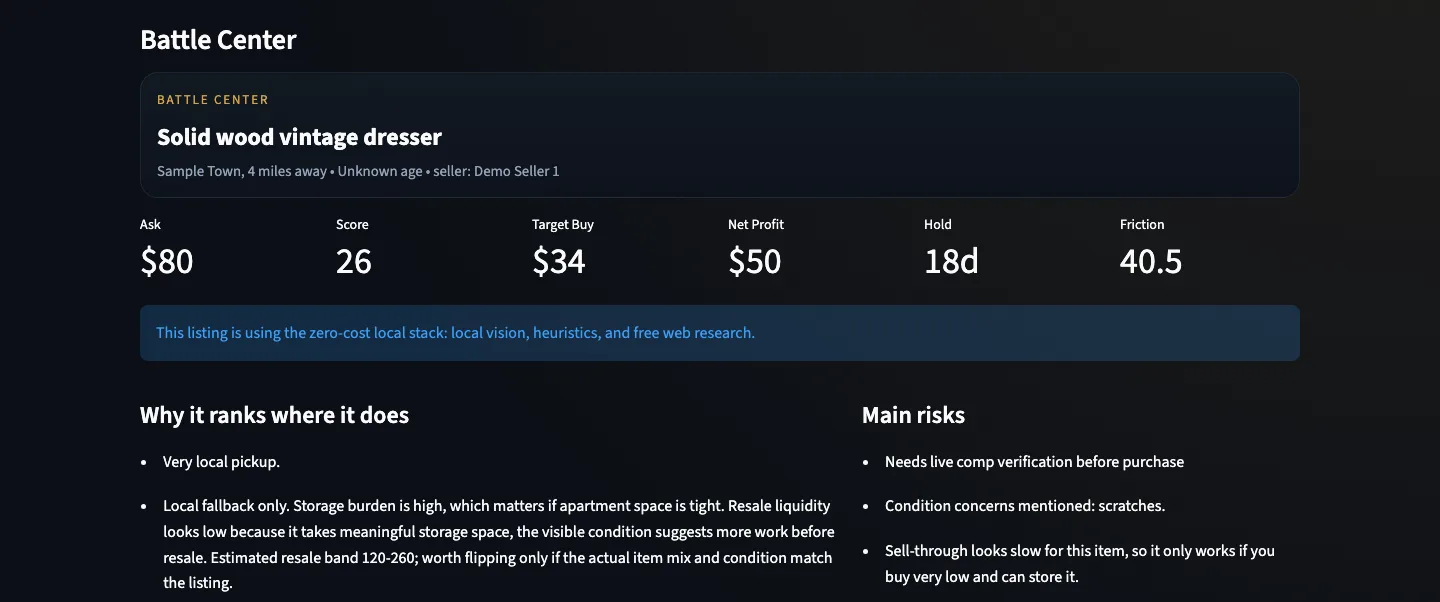
One deal, explained
An $80 ask against an estimated resale band of $120 to $260: a target buy of $34 and a $50 net over 18 days.
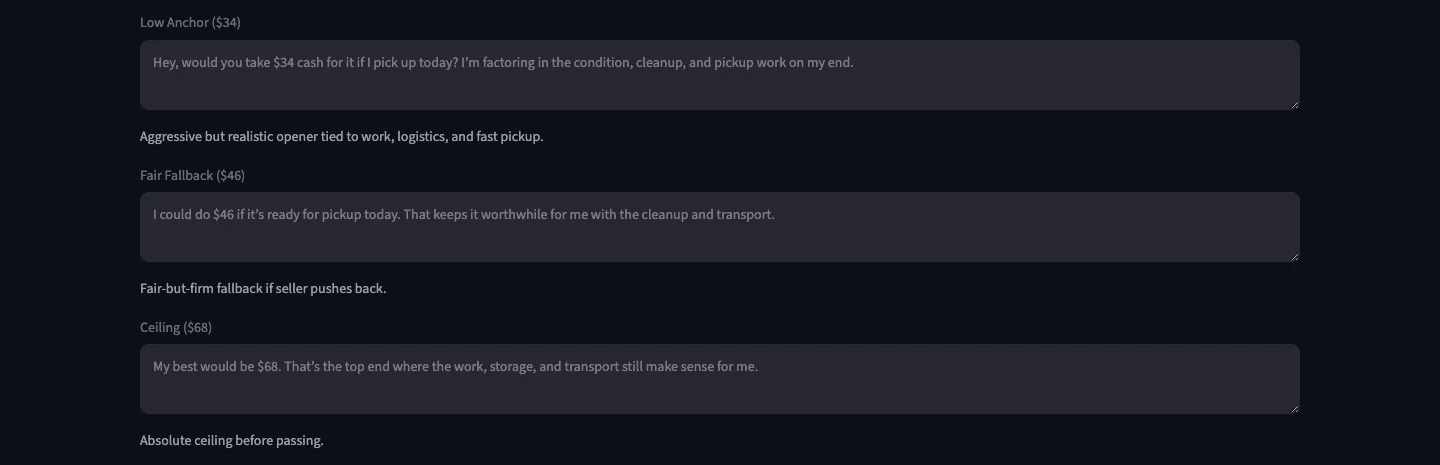
Messages to the seller
Three drafts, from a $34 opener to a $68 ceiling. The demo sends nothing.
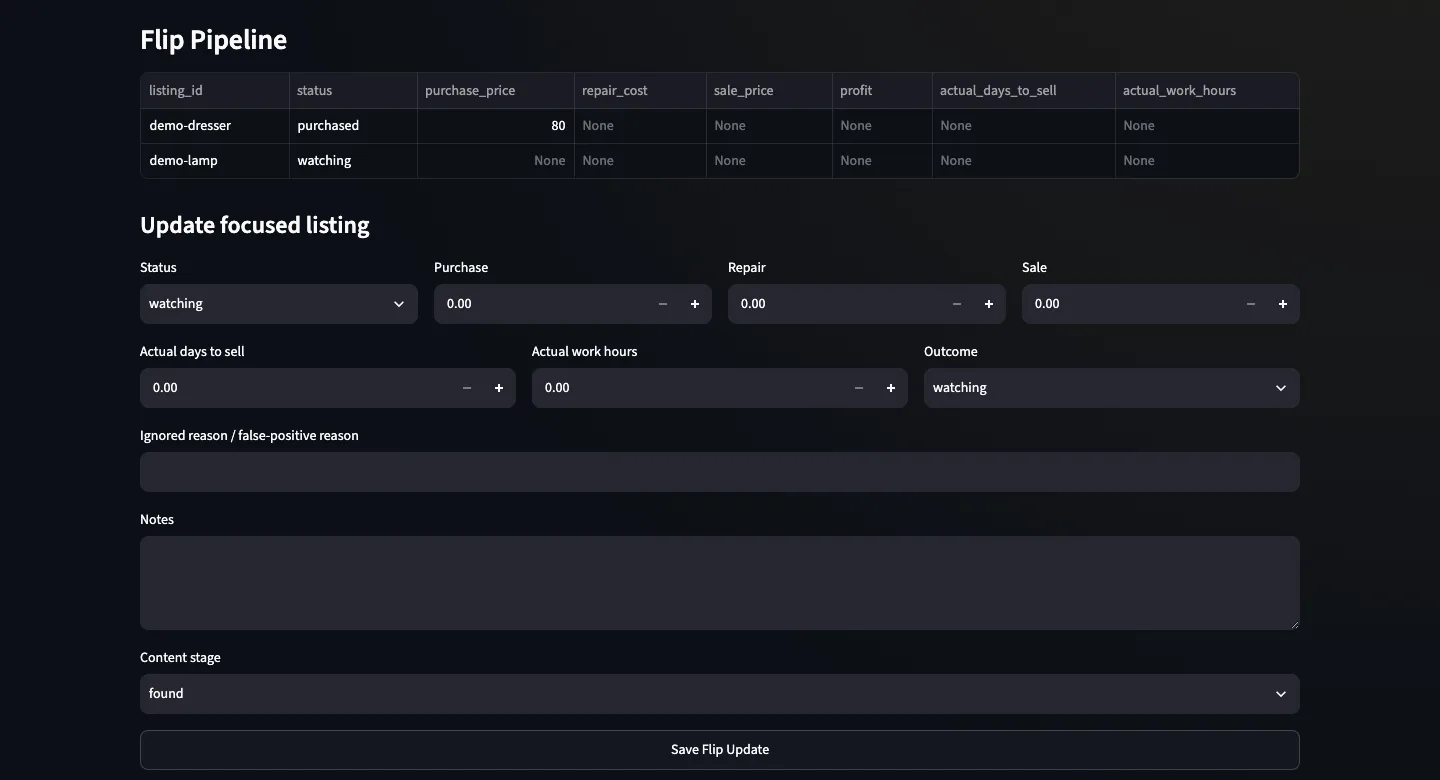
The flip tracker
One demo entry marked purchased, the other still watching.
Where it's going
The full version is a decision aid for resellers: from listings imported by hand, it says what an item probably is, shows the evidence and risks, and answers buy, maybe, skip or not sure.
- NowDemo consoleQueue, analysis, seller drafts and a tracker, on invented listings.
- Narrower categoriesFurniture, decor and small appliances; services and bulk lots filtered out.
- Evidence and confidenceClearer comparisons and reasons, and an explicit not-sure answer.
- Checked against outcomesEstimates graded against a small set of real buy and sale results.
- Reseller decision aidListings the user can see, imported by hand; buy, maybe or skip.